Solar
Timberline Solar shingles
GAF Timberline Solar, where the roofing material itself generates the power and lays down as part of the shingle field rather than sitting on racking above it.
Chapter 01
What makes it different from panels on racking
A conventional solar installation mounts panels on racking that is fixed through your existing roof. The roof stays a roof and the equipment sits above it.
Timberline Solar is a different thing in kind. The roofing material generates the power, and it lays down as part of the shingle field rather than on top of it. You are not adding equipment to a roof, you are replacing part of the roof with something that also makes electricity.
The practical consequence people care about most is that there is no racking driven through a brand new roof deck, and no array to remove the next time anything underneath needs attention.
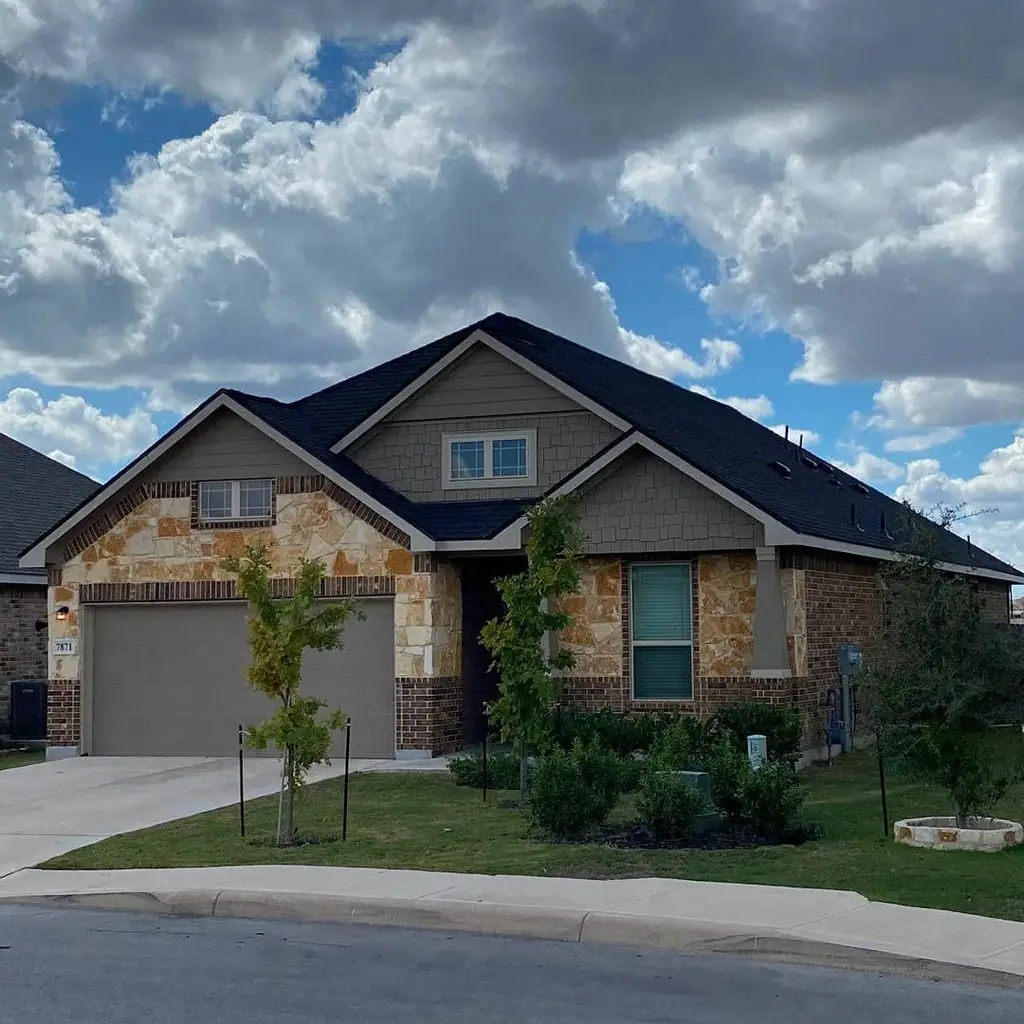
Completed conventional architectural shingle roof on a San Antonio home, the kind of shingle field a Timberline Solar system is installed into
The question that decides whether it suits you
How old is your roof. That is genuinely most of the decision.
If you are replacing the roof anyway, or it has storm damage, the comparison is between a roof and a roof that also generates power, which is a much better trade than the one people usually imagine. The roofing cost was coming regardless.
If your roof is five years old and sound, the case is weaker, because solar shingles would mean tearing off a perfectly good roof. Conventional panels leave it alone. We will tell you which situation you are in.
Chapter 03
What we will not tell you
We will not quote you a payback period before looking at your roof, and you should be careful of anyone who does.
What a system generates depends on the orientation and pitch of your specific planes, the shading across the day and across the year, your household's actual consumption, and the terms your utility offers. Those are not things anybody can know from your address.
What we will do is come out, look at the planes and the shading, and tell you honestly what the roof can support.
The roof underneath still has to be right
Whatever is generating the power, it is sitting on a roof, and the flashing, valleys and penetrations are still where that roof will eventually fail.
Sorting those out first is the cheapest part of the whole project and the one most likely to cause expensive trouble if it gets skipped, because the cost of getting back to a bad detail goes up once there is a solar system over it.
GAF certified installer. We install both solar shingles and conventional panels, so we have no reason to push either.