Three things that actually make a roof last longer
A roof rarely fails in the middle of a plane. It fails at the edges and the interruptions.
September 6, 2026 · 3 min read
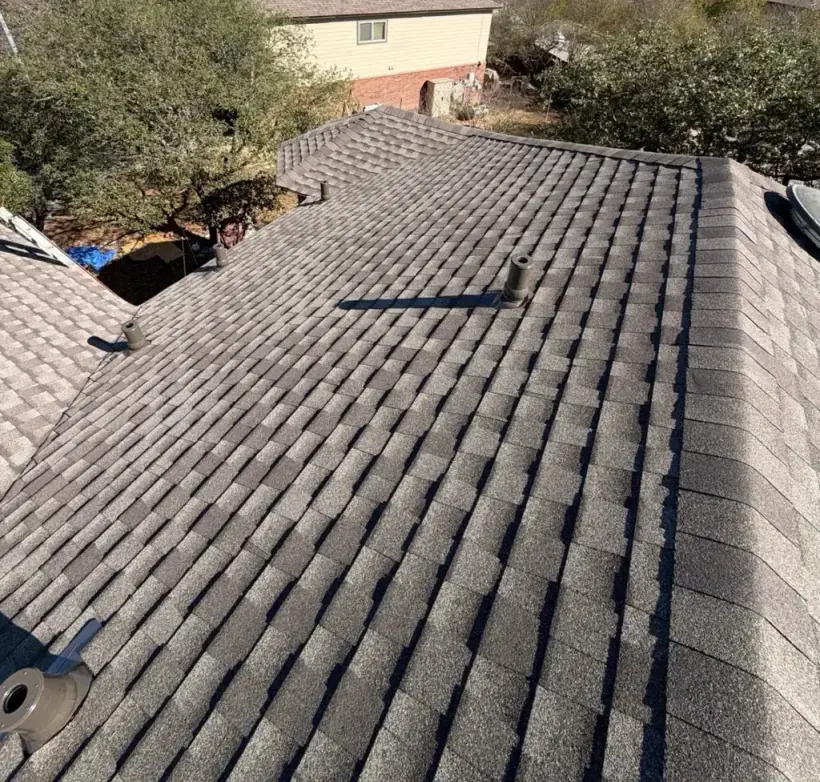
People picture a roof wearing out the way a pair of shoes does, evenly, all over, until one day it is finished. That is not how it goes. The broad open planes of a roof usually age slowly and predictably. What fails early are the edges and the interruptions: the valleys, the flashing where the roof meets a wall or a chimney, the penetrations for vents and pipes, and the ridge.
Which is good news, because it means the things that extend a roof's life are specific and mostly cheap, as long as they happen before the water finds its way in.
1. Get the flashing looked at, not the shingles
Flashing is the metal that bridges a joint the shingles cannot cover on their own: where the roof meets a chimney, where a lower roof runs into a wall, around a skylight, in the valley where two planes come together. It is doing the hardest job on the roof, and it is usually the first thing to give.
Flashing fails quietly. It lifts slightly, or the sealant behind it perishes, or a previous repair was made with caulk where a proper metal detail was needed. None of that is visible from the ground, and none of it announces itself until there is a stain on a ceiling.
This is the single highest value thing to have inspected, because reflashing a detail is an ordinary job and replacing a section of decking and drywall is not.
2. Keep water moving off the roof, not sitting on it
Texas rain does not arrive gently. It arrives all at once, and a gutter system that is undersized, sagging, or clogged will simply give up and let the water go over the edge, straight down the fascia and into the ground next to the foundation.
Two things are worth checking. First, whether the gutters are actually clear, which is a seasonal job and not a once in a decade one. Second, whether they were the right size for the roof in the first place. A large roof plane dumping into a small gutter run will overflow every serious storm regardless of how clean it is.
We install gutter systems in durable materials, sized for the roof that is feeding them, precisely because the alternative is a roof that is fine and a fascia board that is rotting.
3. Have somebody go up after the storm, not after the stain
Hail and high wind do a particular kind of damage that is easy to miss. Hail bruises a shingle, knocking granules loose and shortening its life without necessarily making a hole. Wind lifts and creases shingles, breaking the seal without tearing anything off. From the driveway, the roof looks the same as it did the day before.
The damage is real, though, and it matters twice over. It shortens the life of the roof, and it is the kind of thing an insurance claim exists for, but claims generally have time limits. A roof inspected shortly after a storm gives you options. A roof inspected two years later, when a ceiling stain finally appears, often does not.
Sometimes the answer is that the roof is fine
This is worth saying plainly, because it is the part homeowners least expect. Not every leak is a roof leak.
One customer called us out for what everyone assumed was a roof problem. Daniel went up, inspected the roof thoroughly, and then kept looking. The water was getting in through caulking that had perished between the brick and the wood trim. It had nothing to do with the roof. We recaulked it, tested it for water sealing, checked that everything was dry, and did not charge for the repair.
A roofer who will tell you your roof is fine is worth more than one who will not, because it means you can believe them the day they tell you it is not.
What this looks like in practice
- Have the flashing and the valleys inspected, not just the field of the roof
- Clear the gutters seasonally, and check they were sized correctly to begin with
- Book an inspection after hail or high wind, while a claim is still open to you
- Deal with a lifted or creased shingle now rather than after it lets water past
- Ask for photographs of anything found, so you can see it yourself
Estimates are free and we will come and look. Call (210) 650-2090, at any hour.
Twin Hammers Roofing & Contracting, (210) 650-2090
Call (210) 650-2090